
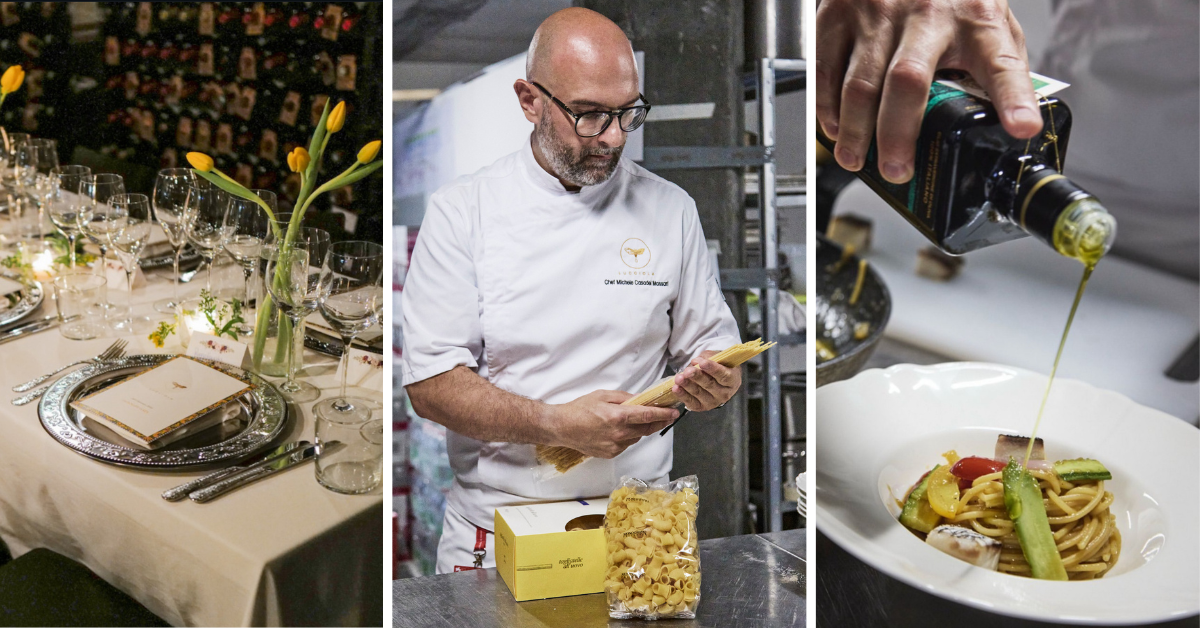
There is a particular kind of light that appears only under the right conditions. Pier Paolo Pasolini, the Italian poet and filmmaker, wrote about it in one of the last pieces he ever penned before his death: the lucciola, the firefly: an insect that can only shine in the presence of purity. When chef Michele Casadei Massari was walking through the Upper West Side of Manhattan, mid-renovation on what would become his restaurant, he looked down and found one on his leg.
Casadei Massari took it as a sign. It is the kind of moment that makes complete sense when you understand who he is: a man shaped by war survivors and Bologna osterie, who has somehow ended up having his own restaurant “Lucciola” in New York City, hosting film festival galas, cooking for diplomats at the United Nations, and making food for some of the most powerful brands in the world, while insisting, with quiet ferocity, that none of it has changed what he believes food is actually for.
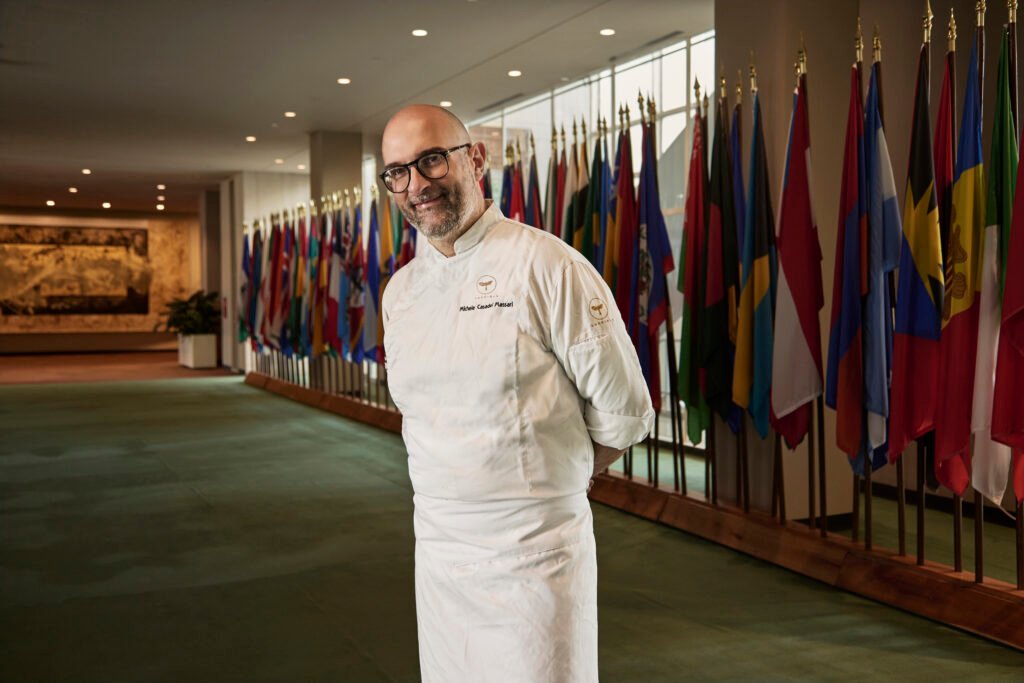
Casadei Massari was born and raised in Bologna. It was his grandfathers who first put him in the kitchen. Both of them, independently, as if they had agreed on it without speaking.
Both grandfathers had survived the Second World War through food. Nonno Aldo, his paternal grandfather, had escaped the Germans and became a baker. Nonno Gigi, his maternal grandfather, had found a way to cook in the military and never stopped. When he retired, he was still cooking daily for his village. “Nonno Gigi always said, ‘You can always travel as long as you can cook. You don’t need to speak any language.” For two men who had survived a war with almost nothing, it was the only future they knew how to promise.
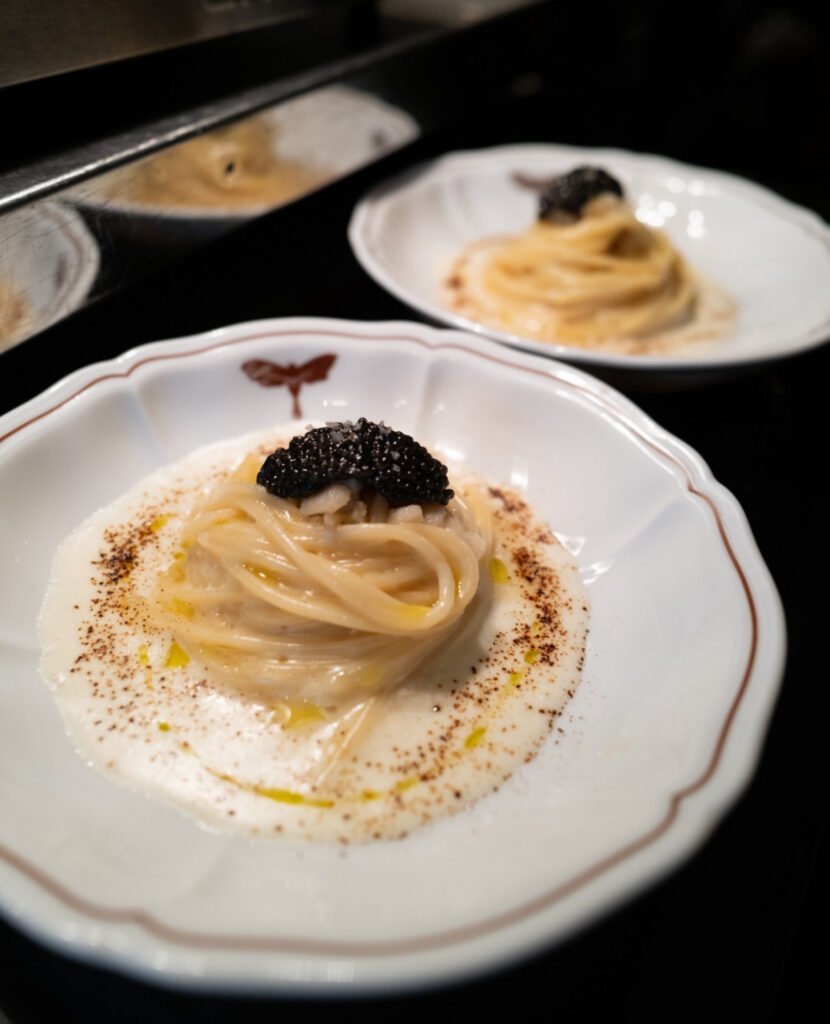
He later enrolled at the University of Bologna, thinking he wanted to pursue a career in medicine. But he also cooked at night, produced events, ran osterie, and discovered he had an instinctive gift for reading a room, any room, and knowing what it needed. When he told his professors he was leaving medicine, they begged him to stay. He left anyway, pivoting into technology retail for a major telecom company, while opening restaurants almost as a reflex. By 2004, he had committed fully to the culinary world. He has never looked back and never borrowed a euro to do it.
“I never had investors. I never had the need,” he says. “If there’s an idea, the money follows.”
The rooms he has cooked in since then bear little resemblance to a wartime kitchen in Emilia-Romagna. For over a decade, he has served as both a trusted chef and a culinary ambassador for some of Italy’s most iconic brands, curating culinary experiences across North America and beyond. His approach, he says, is simple. “Stay focused, work with passion, and serve the brand as faithfully as possible.”
Giulia Perovich, founder of the public relations agency Arnald NYC, has represented Casadei Massari for years, as a client and as a friend. Her work sits at the intersection of Italian culture and American audiences. When she considers which brands are worthy of that story, the question she always returns to is the same one Casadei Massari seems to ask of himself: “Does this have the kind of integrity that survives translation?” It is, she says, the only question that matters.
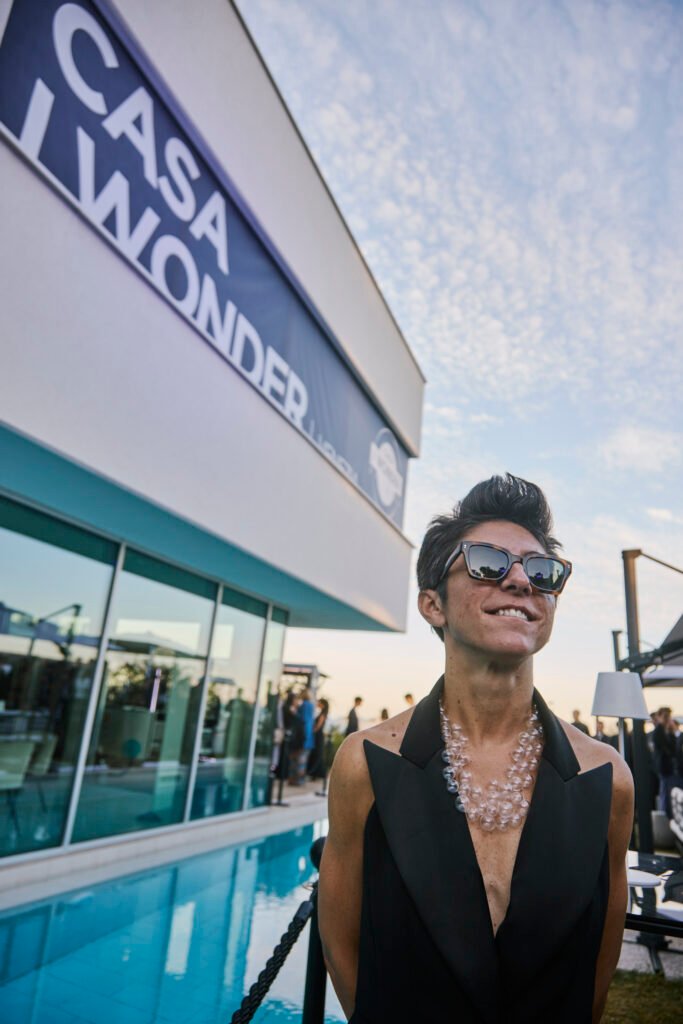
Giulia Perovich, founder of Arnald PR
Most recently, Casadei Massari was asked to cook a gala dinner for the United Nations, the most international room imaginable. His first move was not to plan a menu. He walked into the kitchen and asked the staff what they liked to eat. He spent a day eating alongside them, a second establishing a common language, and a third identifying what each person did best. Then he built the dinner around bread: injera, piadina, chapati, pita, placed at every table with one precise purpose: to make strangers ask each other for something.
“When you have an appetite, and you want something, you will always find the word to say, ‘Can you pass me that?'” The bread basket became a diplomatic act. People who had never spoken began to talk. Perovich describes his approach as “not simplifying, but finding the emotional frequency that already exists and tuning a new audience to it.” At the United Nations that night, the audience was the world.
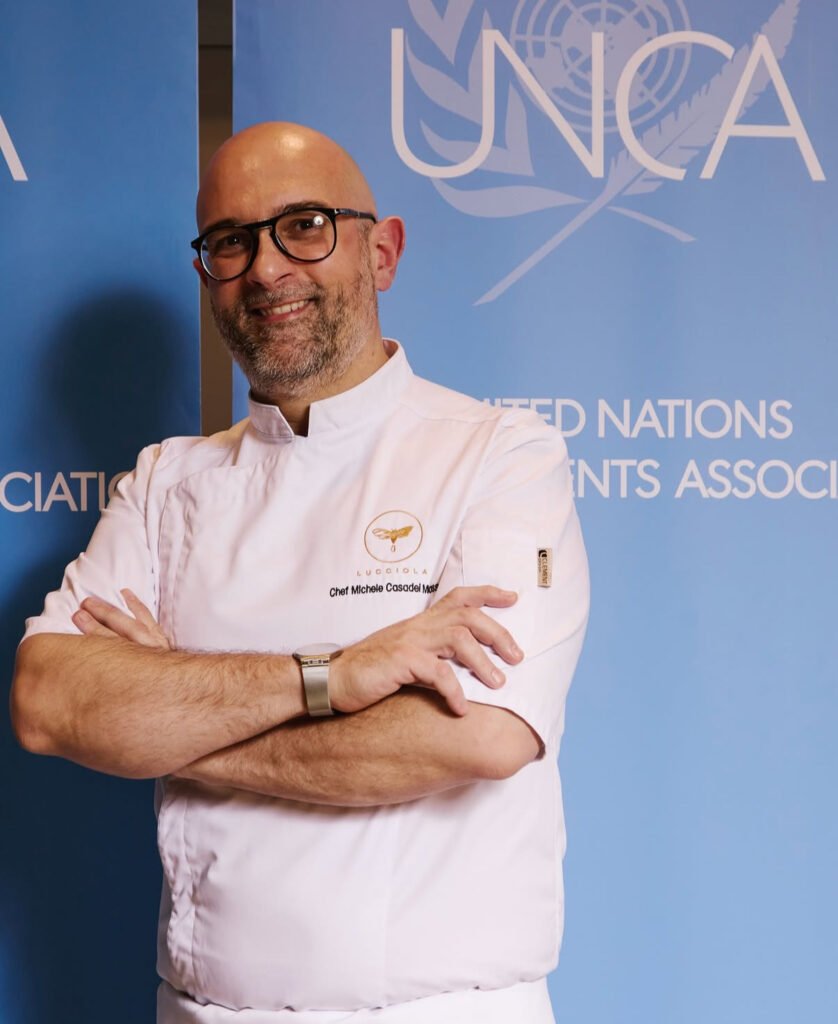
Credits: Maurizio Bresciani
And then there is Casa I Wonder, perhaps the most unexpected room of all. It began when his best friend, Andrea Romeo, founder of I Wonder Pictures, brought him to the Telluride Film Festival in Colorado. The official dinner that night fell short. Casadei Massari, restless, wandered into a pub and began cooking for those around him. Word spread. He was invited to prepare dinner at a nearby villa, a table full of major industry figures, an improvised meal, and the beginning of something neither of them had planned.
For Casadei Massari, this is not hospitality as a profession. It is hospitality as a reflex, something his grandfathers wired into him long before he knew what to call it.
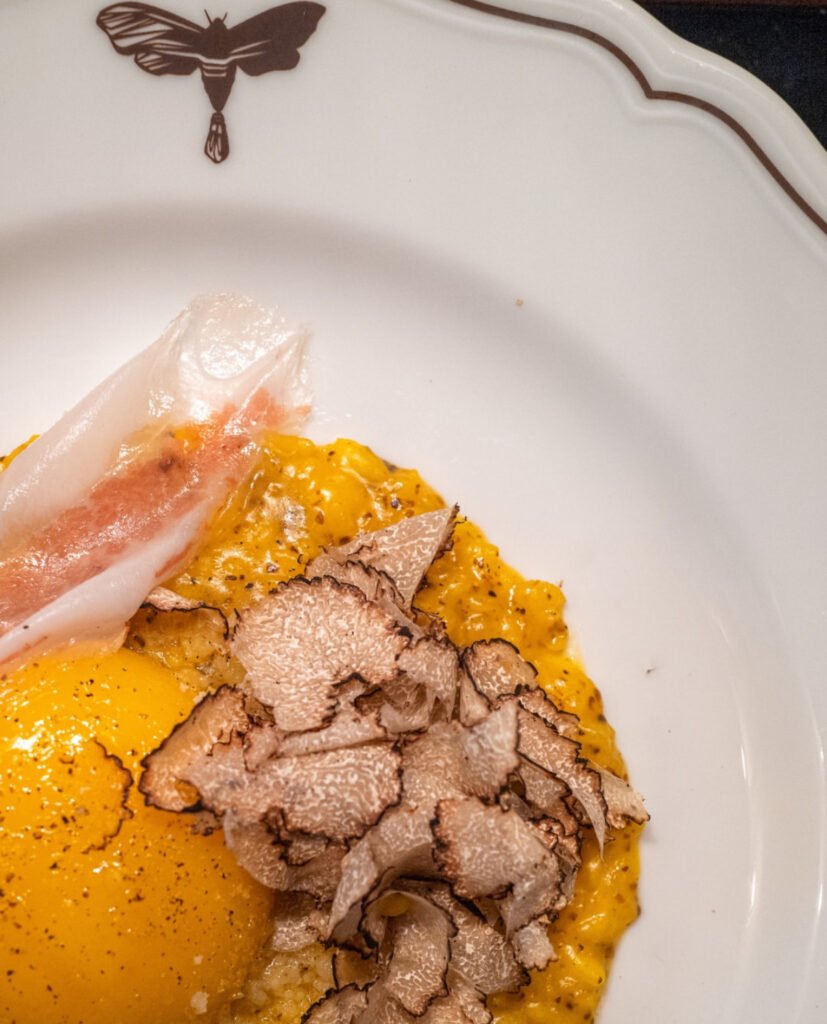
It would be easy, given all of this, for Michele Casadei Massari to have become someone else. The rooms change, but he seems constitutionally unaffected by them, the way certain things glow brightest not because of where they are, but in spite of it.
He thinks about quitting once a week, not as a crisis, but as a reckoning. “The job of a chef is 90% critique,” he says. “Can you take it? Can you respect it?” What keeps him there is not ambition but something closer to fear. “I live in fear all day,” he says, “afraid of not being enough, afraid somebody won’t understand what I’m delivering. So if all this fear applies to me, why should I apply it to you?” When the pressure peaks during service, a single sentence resets the room: It’s just cooking.
His team once photographed him in a difficult moment. The expression on his face was not anger. It was sadness. “I was gifted in not having a temperament that screams,” he says, though perhaps, he admits, his face has always done the talking.
It is, perhaps, the most Italian thing about him that the feeling always finds a way through.
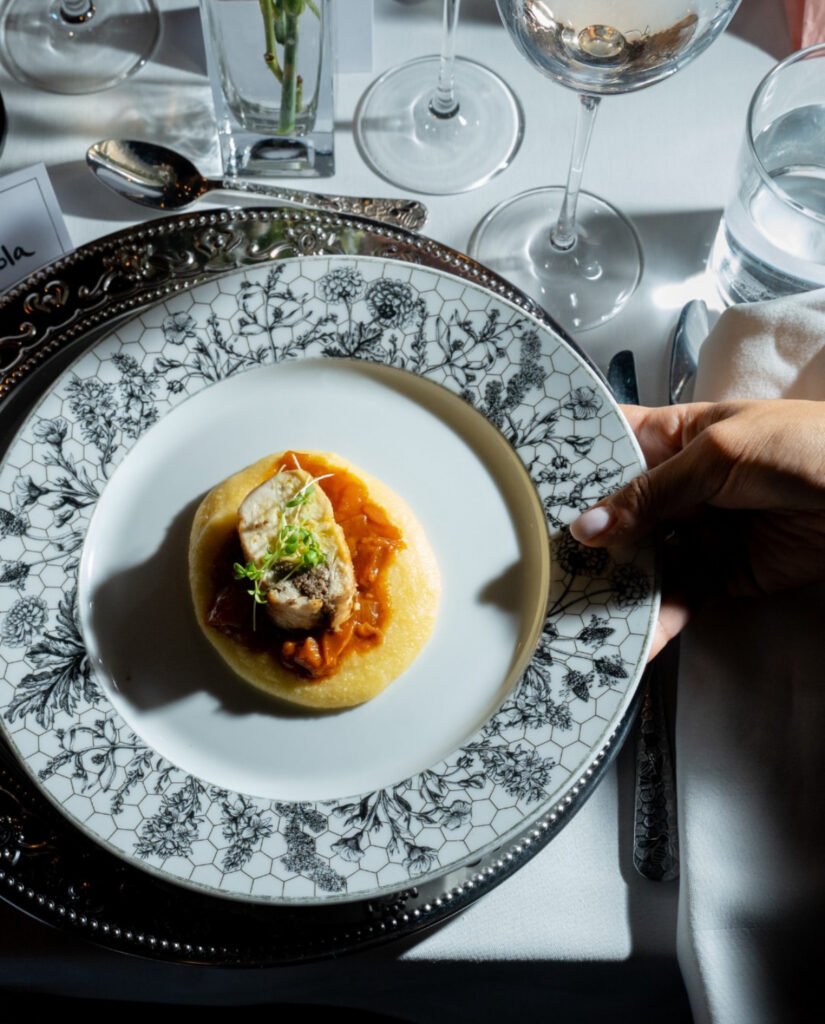
Perovich, when asked where she would take someone to understand Italy, doesn’t hesitate. The Acetaia Giusti in Modena, she says, is the oldest balsamic vinegar producer in the world, where centuries of barrels make time itself visible. “Everyone talks about the dolce vita,” she says, “but very few people actually taste it. The dolce vita isn’t just beauty and lightness. It’s also repetition. It’s the discipline of doing the same thing, slowly, year after year, because you believe that beautiful things take time.”
For Casadei Massari, that discipline has an answer. Ask him about his version of the dolce vita: one person, one dish, no rules, anywhere in the world, and the answer arrives without hesitation: his daughter, on the rooftop of his condo in New York, overlooking the skyline of Manhattan, with a pot of pasta al pomodoro.
For chef Michele Casadei Massari, this is the meal and the audience that matters most.
Images: Lucciola Restaurant, Maurizio Bresciani, Arnald PR