
From Barcelona to Girona, a story made of light atmospheres and quiet presences, between the timeless enchantment of Antoni Gaudí’s architecture and rooftops suspended over the sea, across the addresses of Small Luxury Hotels of the World.
There is a Barcelona that does not raise its voice. Not the one from postcards, but the one that lets itself be crossed with a slow pace, between solids and voids, light and matter. It seeps into the curves of Casa Milà – La Pedrera, where the architecture seems to breathe, and reflects in the luminous geometries of the Palau de la Música Catalana, where every detail is designed to surprise without ever being excessive.
Then the rhythm changes. It slips between the stones of the Gothic Quarter, in the heart of Ciutat Vella, where time layers and stays, rather than passes. Here, Barcelona becomes intimate, almost silent — made of hidden courtyards, narrow passages, sudden perspectives.
And finally, it opens to the contemporary, without rupture. MOCA Barcelona — a fluid, essential space — speaks of a city that keeps moving, reinventing itself, without losing coherence.
Not to be missed is a visit to the Palau de la Música Catalana, which was born at the turn of the twentieth century from the meeting between the Orfeó Català project — searching for a performance venue — and the vision of Lluís Domènech i Montaner, who transcended the conventions of traditional theatre. The result is an architecture that translates music into form: one of the masterpieces of Catalan Modernisme, where light, decoration, and structure build a coherent whole, conceived to be experienced as much as heard. A defining feature is the concert hall, with its drop-shaped skylight and large lateral windows, allowing it to function even in the absence of artificial light.
It is within this balance — between vision and restraint, between history and the present — that the addresses of Small Luxury Hotels of the World find their place: spaces that do not seek to impose themselves, but to harmonise. With the city, first of all. And with those who move through it.
SLH is an international collection of independent hotels, selected one by one across more than 90 countries, far removed from the logic of chains and uniformity. With an average of around 50 rooms, these properties choose a more contained and discreet scale, where the relationship with the guest becomes central again, and wellbeing is an integral part of the experience. From fishermen’s cottages to treehouses, from rainforest retreats to Alpine chalets, to desert ranches — every stay has its own identity: intimate spaces, often in unexpected locations, where nothing is replicated but rather interpreted.
And here too, in this corner of Spain, these addresses make themselves known: in the same idea of measure, in the ability to leave a mark without ever raising the tone.
In this Barcelona of layered histories and measured contrasts, hospitality follows the same logic: not to impose, but to enter into dialogue with what already exists. This is where two properties come into play — the Claris Hotel & Spa and the Grand Hotel Central.
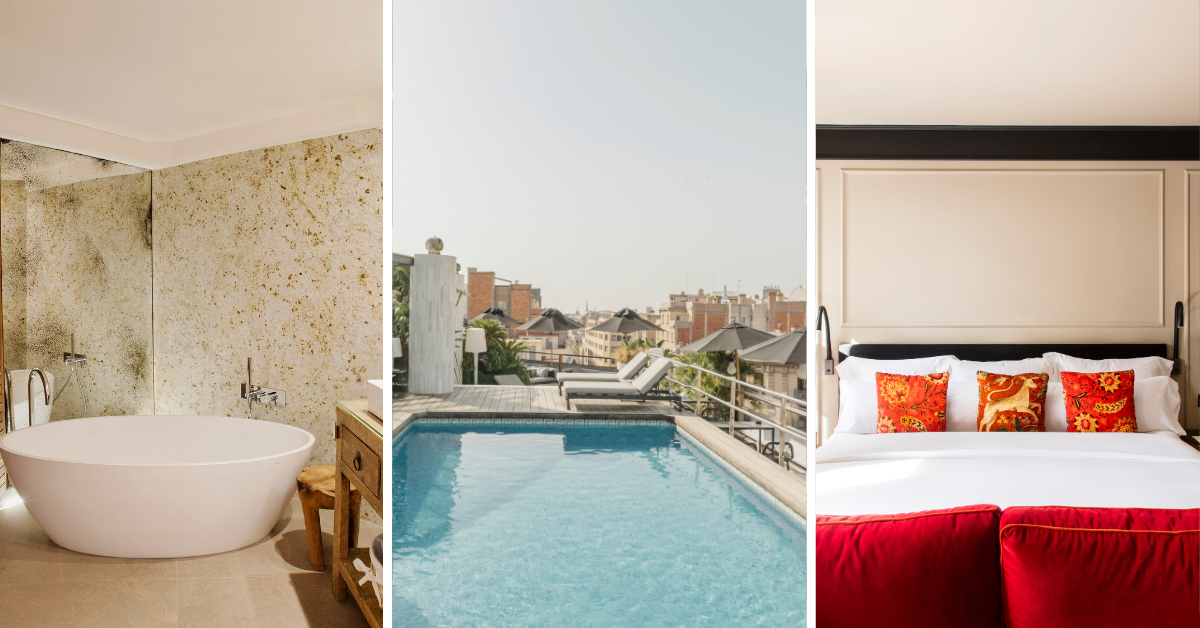
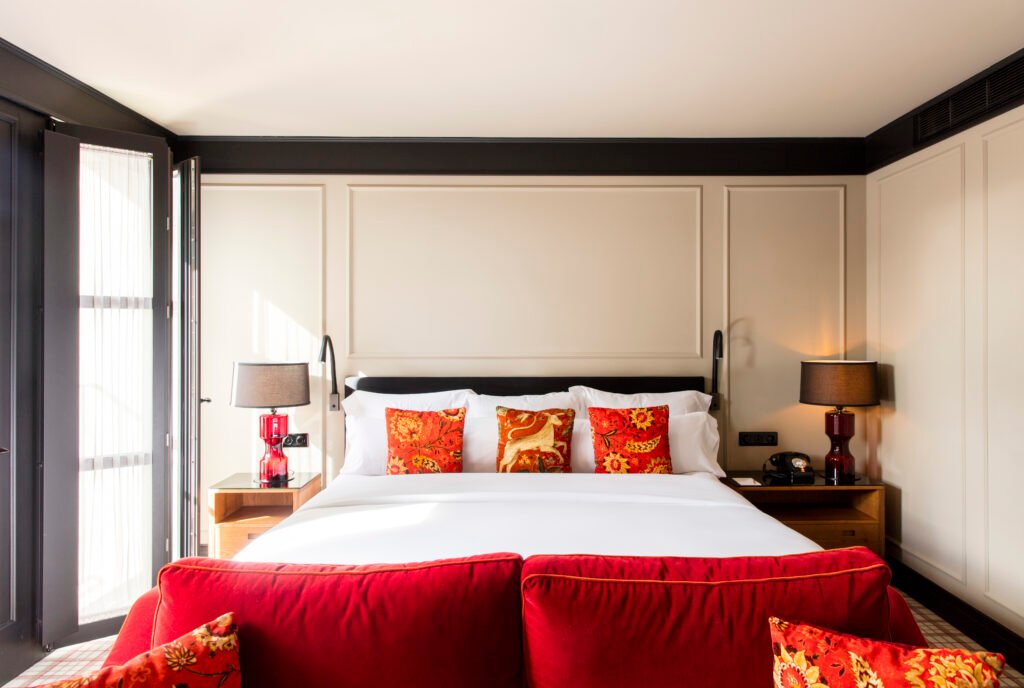
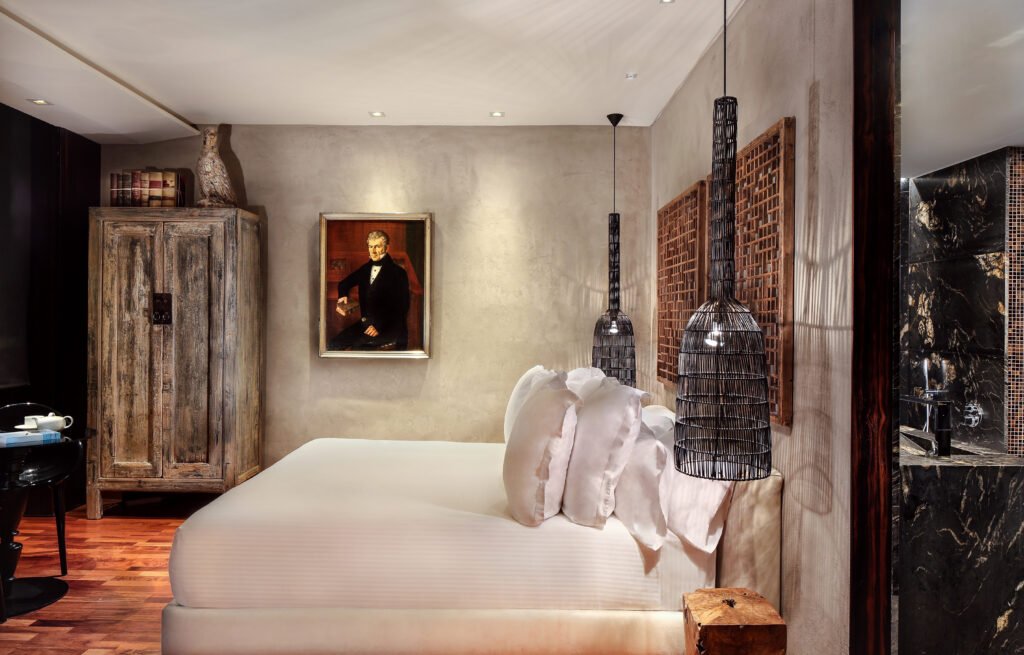
The first works with material and memory. The Claris Hotel & Spa, housed in a nineteenth-century palace in the Eixample, builds its identity around a continuous dialogue between heritage and design: art collections, archaeological references, interiors that blend eras and influences without ever becoming didactic. It is a place of density — at times almost museological — but lightened by a contemporary aesthetic and spaces such as the rooftop, which bring everything back to a more open, urban dimension.
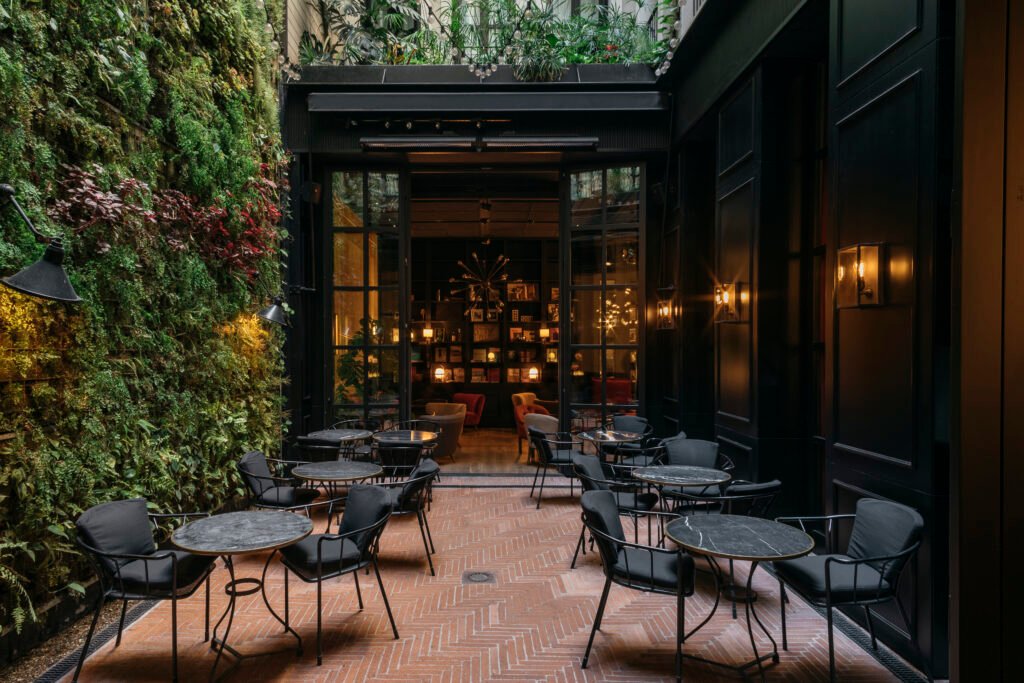
The gastronomic offer follows the same line: Terraza del Claris interprets Mediterranean cuisine with a current, light approach, designed to be enjoyed outdoors, while Os-Kuro introduces a more spare and contemporary register, with a focus on Japanese cuisine and an aesthetic of detail.
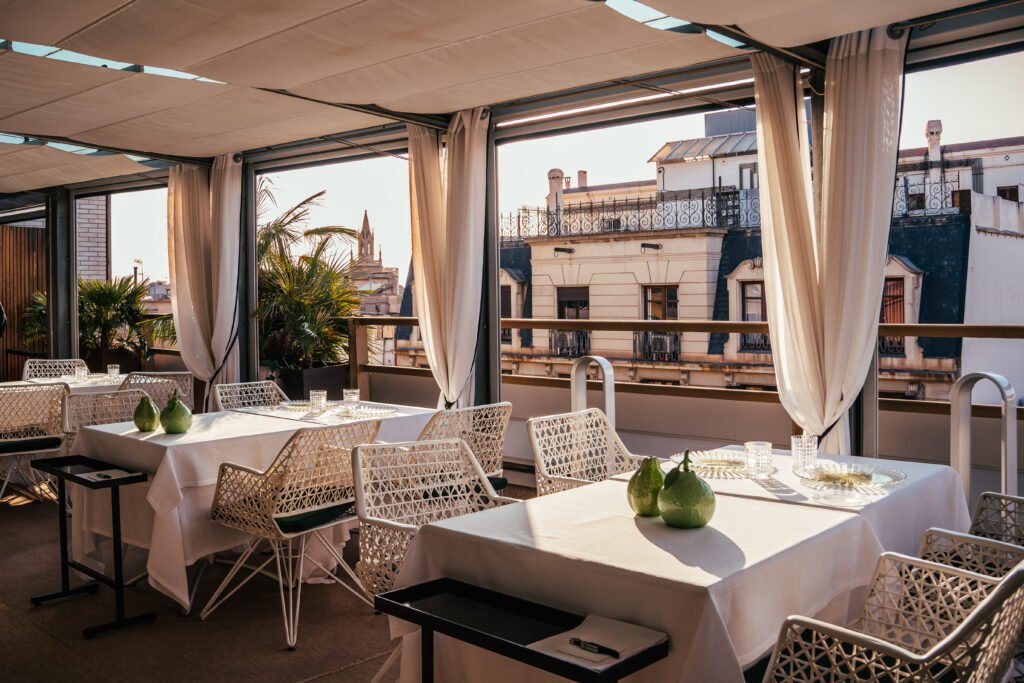
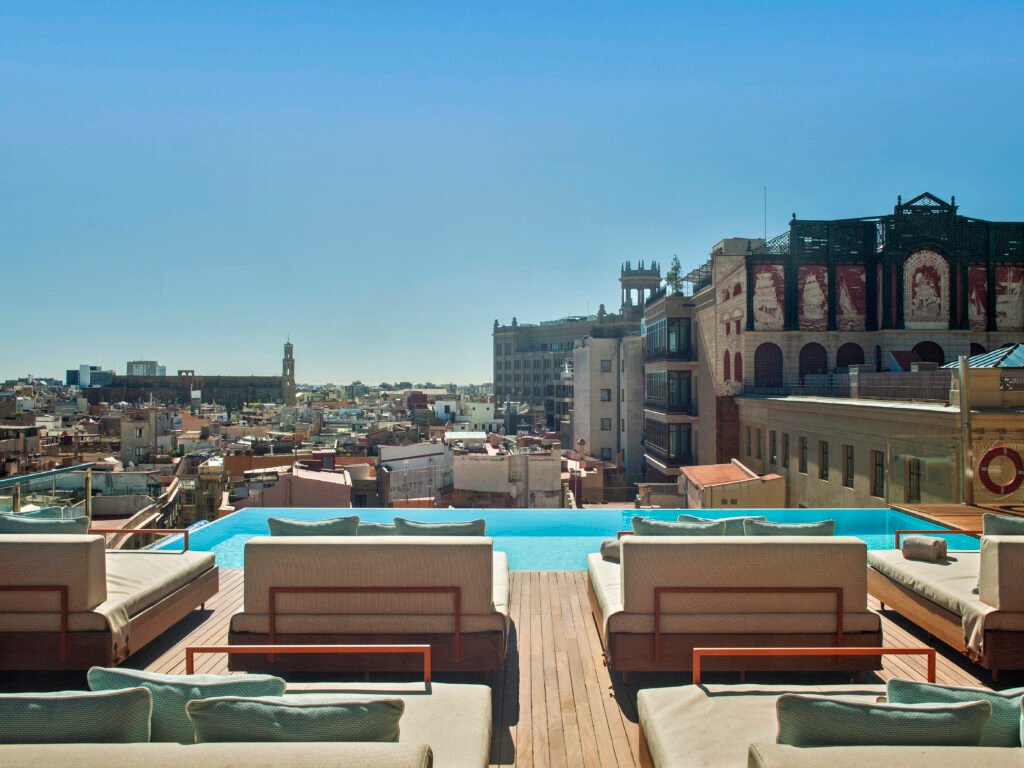
Of a different character, but equally coherent, is the Grand Hotel Central. Here, the narrative becomes more essential, more linear. Overlooking the edge of Ciutat Vella, it works by subtraction: clean lines, a measured palette, and a direct relationship with the historic city. Its rooftop view — among the most iconic in Barcelona — becomes a point of suspension, where the gaze drifts from the rooftops to the sea, returning that sense of lightness that runs through the entire city. The infinity pool takes centre stage, while a sauna alongside adds an extra dimension.
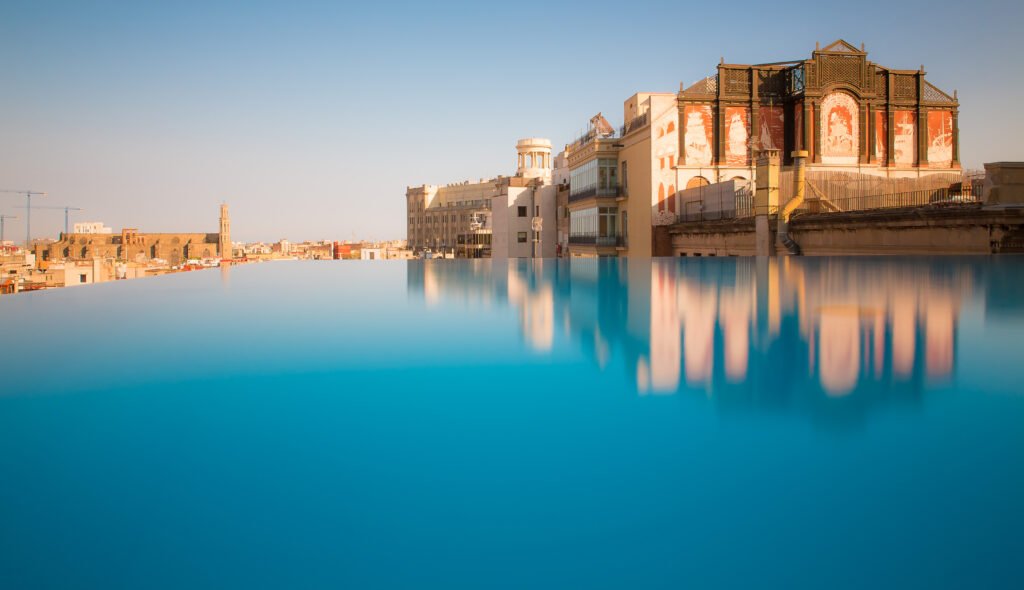
Then, as the light fades, something more subtle surfaces: a sgraffito mural from the 1920s, signed by Oleguer Junyent, visible only from up here. A near-hidden detail, as though the city chooses to reveal itself — but only to those who know how to look. Here too, the food and beverage offering is part of the story: Can Bo, opened in 2024 and led by Chef Lorenzo Cavazzoni, offers a contemporary Catalan cuisine — grounded yet never heavy — while the panoramic terrace transforms into a fluid space of cocktails and light, where the city is observed rather than consumed.
The library of the Cambó collection remains a suspended, near-silent space where everything is authentic and steeped in history, time slows down, and it stands as the crown jewel of this hotel. Around it, a discreet web of cultural references takes shape: works of art, dialogues with local creatives, a distinctive olfactory signature, and details conceived to build an authentic and ongoing relationship with the city.
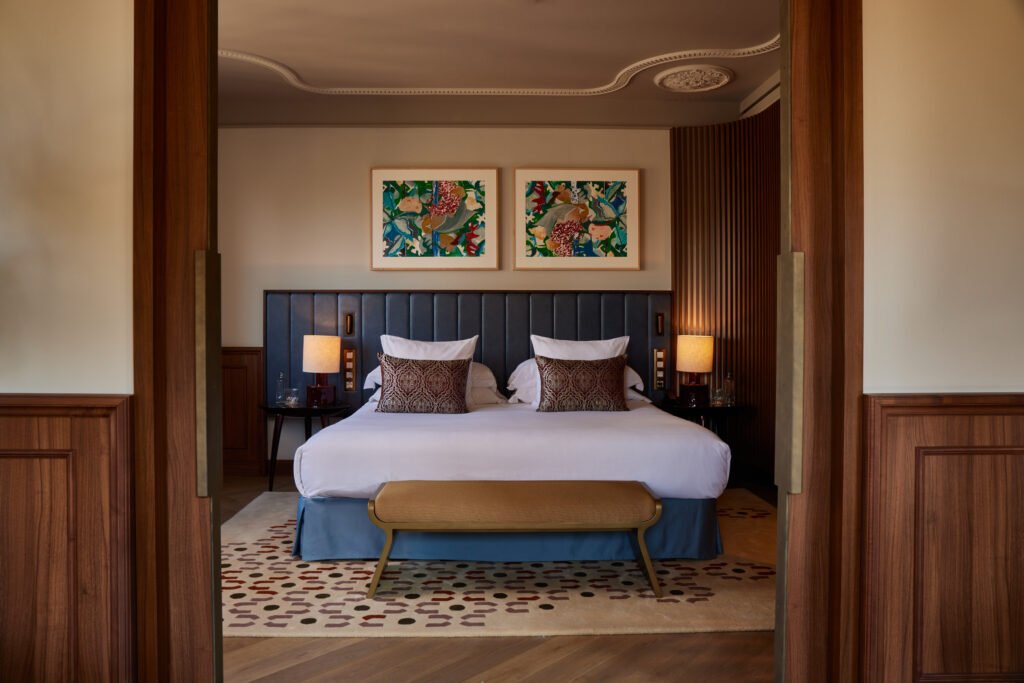
Two different ways of inhabiting the same place, but with the same posture: not to interrupt Barcelona’s narrative, but to continue it, naturally. These addresses do not merely insert themselves into the city — they gather its signs, filter them, and return them in a form that is their own, coherent. This is where the hallmark of Small Luxury Hotels of the World becomes recognisable: a continuous dialogue with context, until the property becomes an instrument of reading — discreet, but precise — through which the city allows itself to be interpreted.
In 2026, Barcelona will be named UNESCO-UIA World Capital of Architecture and will pay tribute to the centenary of Antoni Gaudí, while the Tower of Jesus Christ at the Sagrada Família advances toward completion. Added to this is an event unprecedented for the city, which will for the first time host the Grand Départ of the Tour de France. Taken together, these are not simply milestones but the portrait of a city in continuous motion — between legacy and transformation.
From Barcelona to Girona, the journey is swift — just over an hour by high-speed rail — but the pace changes entirely. It is the perfect detour for those wanting to slow down.
Girona lets itself be traversed without hurry, starting from its compact, layered historic centre. The houses facing the Onyar — yellow, red, pink — form a continuous, irregular line that surprises with its balance and lightness. The cases penjades, suspended over the water, offer an unexpected, almost painterly image.
Then the gaze shifts: through the lanes of the ancient Jewish quarter, one of the best preserved in Europe, and up to the Cathedral of Girona, which commands the city with its Gothic presence. Girona is a place of echoes, but never of imitation. A subtle equilibrium between different suggestions — water, bridges, arcades, life flowing by — that does not copy but reworks, and that invites, simply, to linger a little longer.
In the heart of Girona’s Barri Vell, Palau Fugit settles in with discretion, as though it had always been there. An eighteenth-century Baroque palace — entirely reimagined — where the dialogue between past and present is not declared but continuous: stone and greenery, silence and city, public spaces and private dimension.
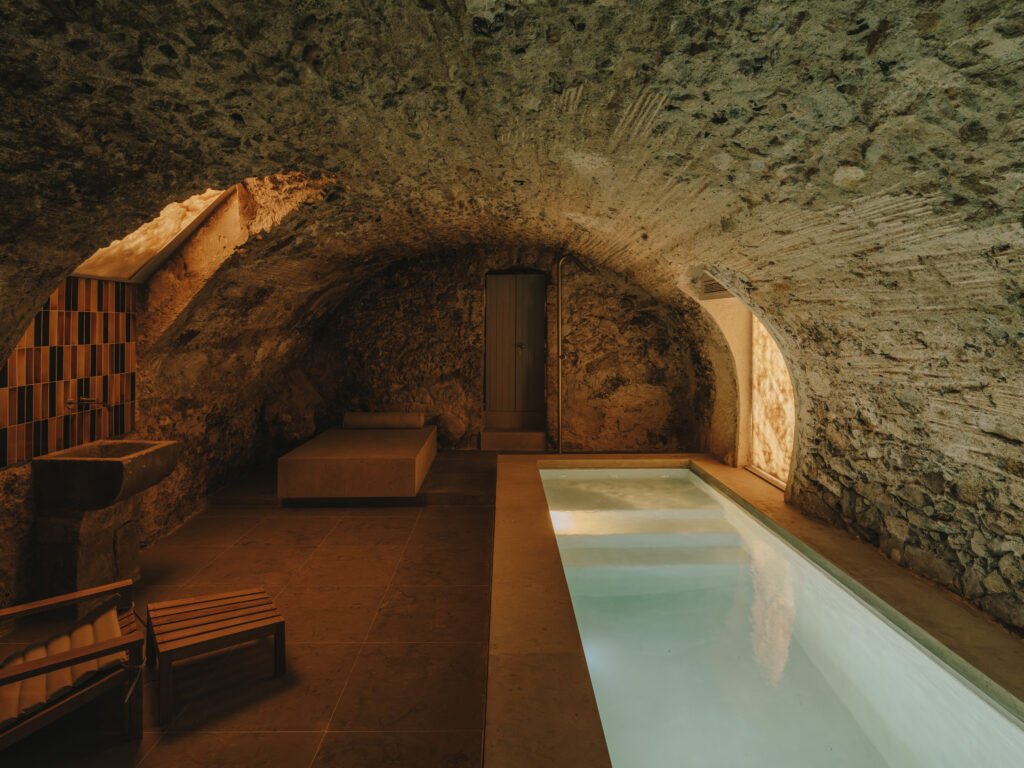
With just 24 rooms, distributed between the Palauet and the Pavelló, the experience remains contained and intimate, built on detail rather than effect. Here, luxury shifts elsewhere: into the materials, into collaborations with local artisans, into a research that runs through every element — from the bespoke fragrance to the textures, to the objects that speak of the territory.
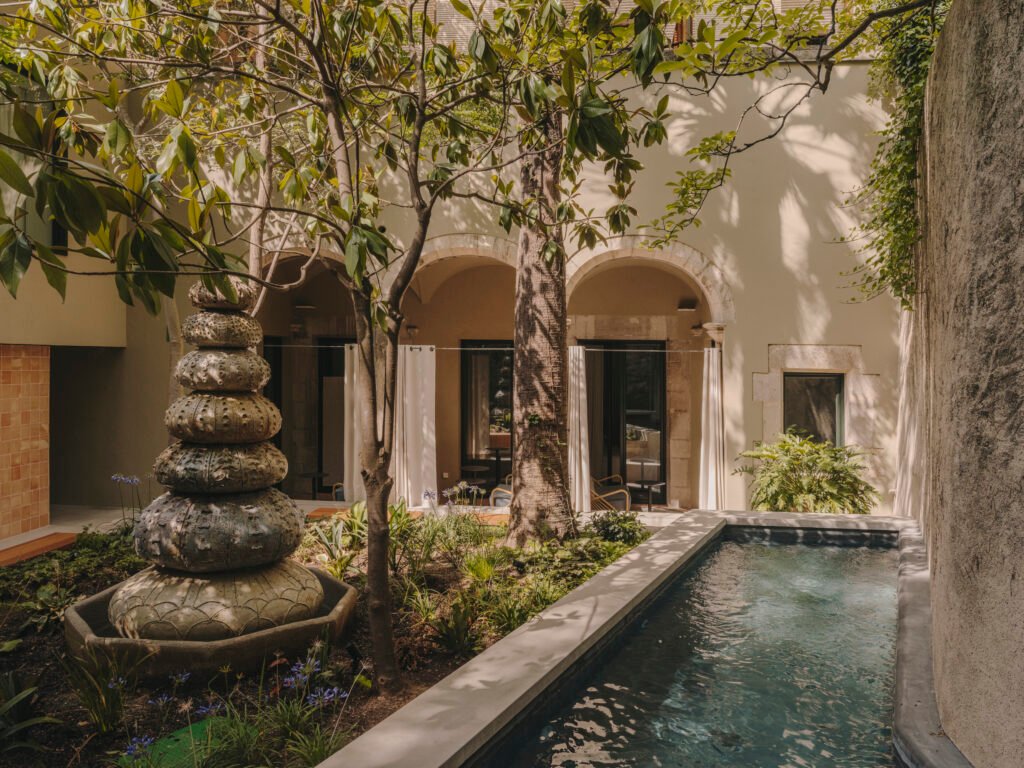
The spaces open and close naturally: an inner patio, a terrace looking out onto the ancient walls, a green dimension that interrupts the urban rhythm. And then the most hidden part — La Cova d’Aigua, carved into the rock — where water and stone bring everything back to an essential form of stillness.
The journey is rounded out by Vueling, partner of the programme: the Barcelona-based airline that holds a strong presence on routes between Italy and Spain, with a central role in connections to the city. It operates a network of over 100 destinations spanning Europe, North Africa, and the Middle East — and was, notably, a pioneer in introducing in-flight Wi-Fi across nearly its entire fleet, which ranks among the most modern and youngest Airbus fleets in operation.
Images: Brands Respectively