
Less than half an hour from the centre of Florence lies a place where wine becomes the thread connecting landscape, hospitality and gastronomy. Torre a Cona, a boutique winery nestled between Chianti and the Valdarno, invites guests to slow down and discover an authentic side of Tuscany, where the pleasure of conviviality is intertwined with a deep appreciation for wine culture.
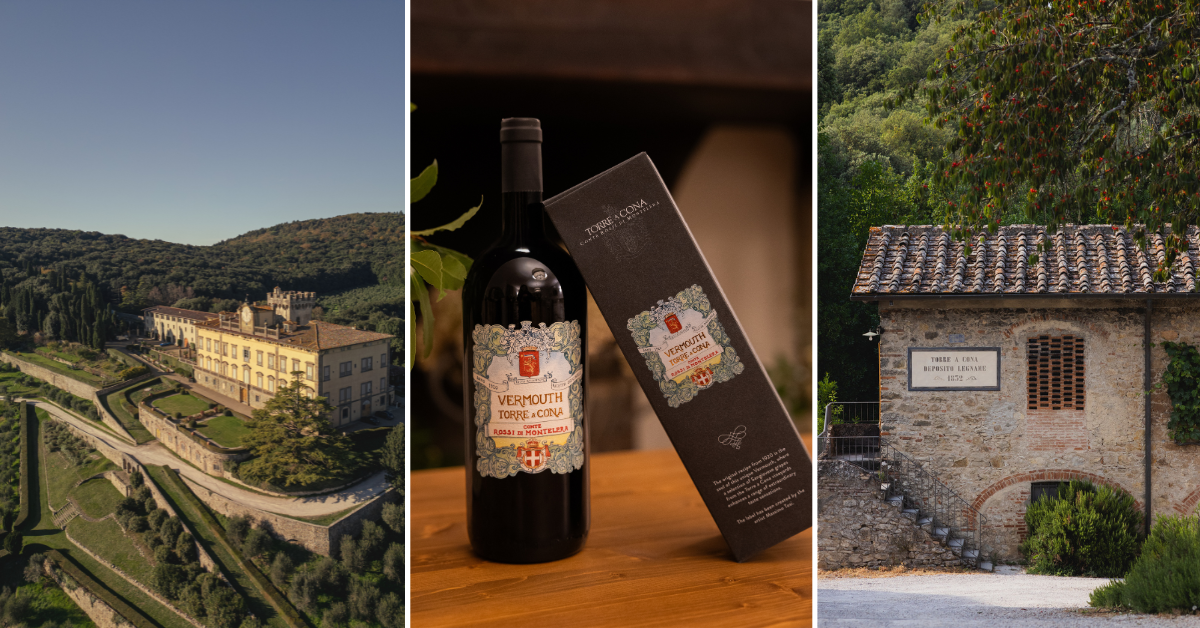
The estate spans approximately 200 hectares, including 19 hectares of vineyards set between 300 and 400 metres above sea level. Vineyards, olive groves and woodland surround the elegant eighteenth-century villa, which today houses beautifully understated rooms and apartments, alongside an Osteria that interprets Tuscan cuisine with balance and character. Nearby, the estate’s historic cellars remain at the heart of its winemaking operation. From single-vineyard Chianti and varietal wines to the estate’s Vin Santo, each bottle reflects both the character of the landscape and the meticulous work carried out in the vineyards and cellar. Among the most compelling expressions is Molino degli Innocenti, produced from a small, particularly distinguished vineyard parcel and named Rosso dell’Anno in the 2025 Gambero Rosso Vini d’Italia guide. The accolade is a testament to an ambitious winemaking project built on patience, research and a long-term vision.
Equally intriguing is Torre a Cona Vermouth, created from a historic recipe belonging to the Rossi di Montelera family. Made with pure Sangiovese and a blend of 33 botanicals, it is an elegant tribute to Italy’s long-standing aperitivo and mixology culture, equally enjoyable neat or as the foundation of classic cocktails. The estate became part of the Rossi di Montelera family holdings in 1935, connecting Torre a Cona to a family deeply intertwined with the history of Italian wine and the legendary Martini & Rossi. That legacy began with the entrepreneurial vision of Luigi Rossi, who rose from humble beginnings to become one of the leading figures in Italy’s nineteenth-century spirits industry. Among his most enduring legacies was a handwritten recipe book containing the formulas that would eventually give rise to Martini. Today, Ludovica, Niccolò and Leonardo Rossi di Montelera carry that heritage forward, balancing respect for an extraordinary family history with a contemporary vision of hospitality and winemaking—one centred around quality, craftsmanship and the preservation of the land.
The experience continues inside the eighteenth-century villa, now transformed into a collection of intimate accommodations. Here, historic character meets understated sophistication. Light-filled rooms, period furnishings, luxurious fabrics and contemporary bathrooms create the feeling of staying in a private Tuscan residence rather than a traditional hotel.
Gastronomy is equally central to Torre a Cona’s identity. Housed within the estate’s former lemon house, the Osteria, led by Chef Enrico Romualdi, celebrates the surrounding territory through a cuisine focused on locally sourced ingredients and a close network of small producers. The philosophy is deliberately authentic: respect the ingredient and allow it the time it deserves. Produce arrives whole and is prepared from scratch in the kitchen, with techniques that demand patience, precision and care. At lunchtime, the approach becomes more relaxed, with a light menu combining Tuscan classics such as gnudi with butter and sage, spaghetti with tomato, aubergine parmigiana and veal cutlet, alongside dishes designed for an unhurried break between wine tastings and walks through the vineyards.
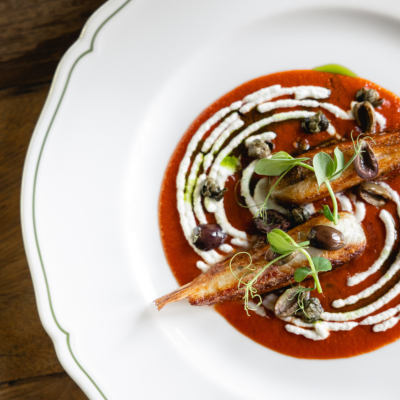
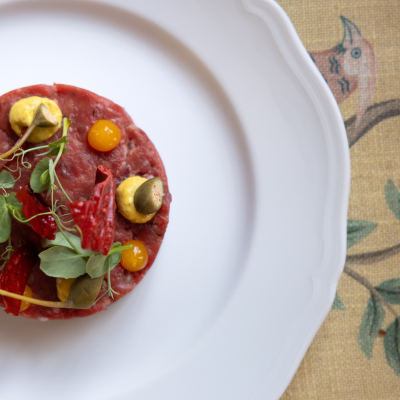
In the evening, the cuisine takes on a more creative dimension through signature dishes that reveal Chef Romualdi’s personality—from beef tartare and handmade maccheroncini with white duck ragù to guinea fowl prepared using a double-cooking technique. The meal concludes with a crème brûlée whose apparent simplicity captures the philosophy of the kitchen: few ingredients, exceptional technique and absolute respect for flavour.
Yet the greatest luxury at Torre a Cona is perhaps the one that can never be listed on a wine menu or restaurant menu. It is time. Time to watch the sun set between the vineyards. Time to wander through the quiet countryside. Time to linger over a glass of wine without looking at the clock. It is a wonderfully authentic way to experience Tuscany—where wine is not the end of the story, but simply where the story begins.
Images: Torre a Cona