
Milan, 1929. The Sordelli family built a grain mill on the edge of the city: heavy, industrial, built to last. It lasted. A century later, Tom Dixon moved in, and the Mulino Estate became the Mua Mua Hotel: twelve rooms where his copper pendants hang above armchairs that belonged to someone’s grandmother, where the stonework is original, and nothing else is, where old and new don’t so much coexist as refuse to acknowledge the difference.
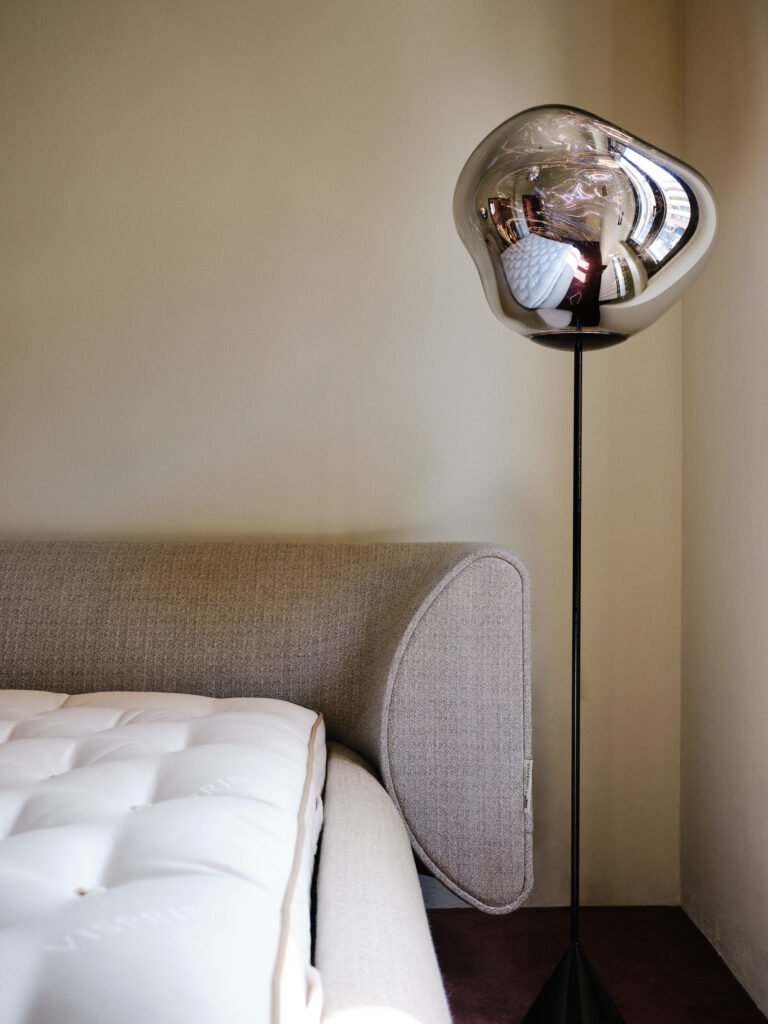
Dixon is characteristically more interested in what the project taught him than in the romance of the setting. “Instead of doing a fake room of a hotel in an exhibition,” he says, “we’ve done a real hotel, and we will leave it here when we’re finished. It teaches us a lot about interior design. About how our objects behave in real life: in terms of luminosity, atmosphere, even aesthetics.” Twelve rooms, each with its own function (spa, romance, business), forced a discipline that showroom installations never demand. “It was a lot of hard work. But it was kind of real life.”
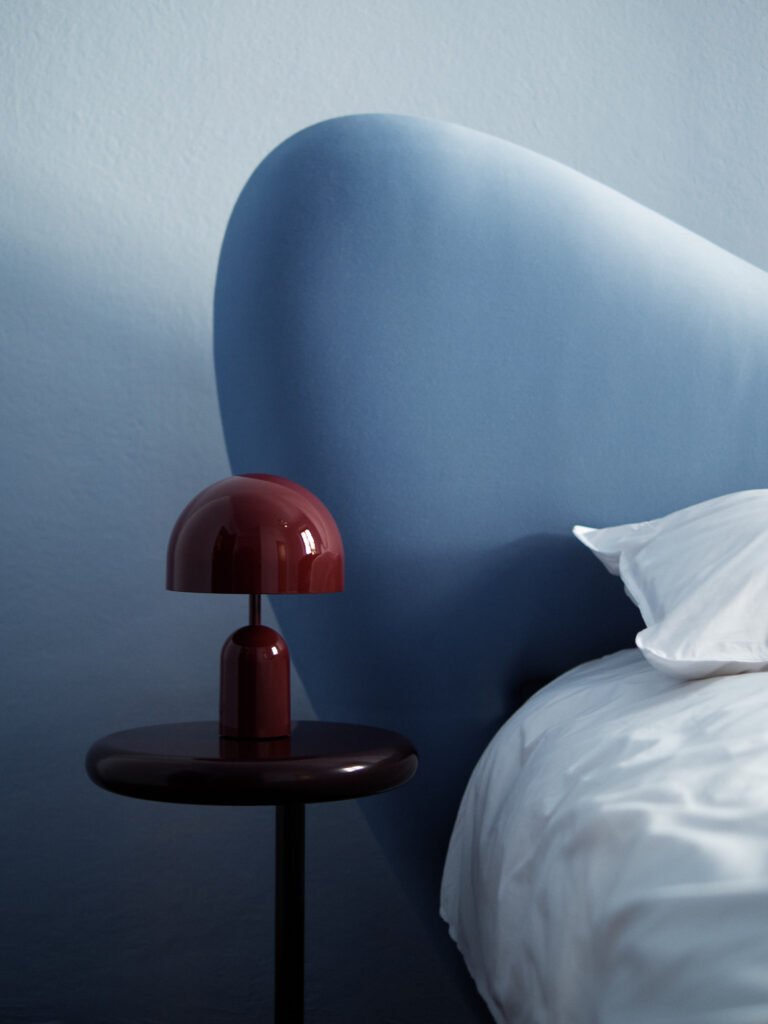
The antiques were not part of the brief. They belonged to Ludovica, the owner, who inherited the estate and the contents of its basement: pieces her family neither loved nor discarded. Dixon used them. “Nobody likes these, right? They were just in the basement. But this makes it feel real, Milan. If you go to somebody’s apartment in Milan, they don’t care if it’s 50s or new. They love design, and they’ll jump it up with their inherited antiques.” This is Dixon’s argument against the entire category of international hotel design: the lobbies that could be anywhere, the rooms that smell of nowhere. “Too many hotels are just international hotels. No texture. When I go to a hotel, I want to feel like I’m in that city.”
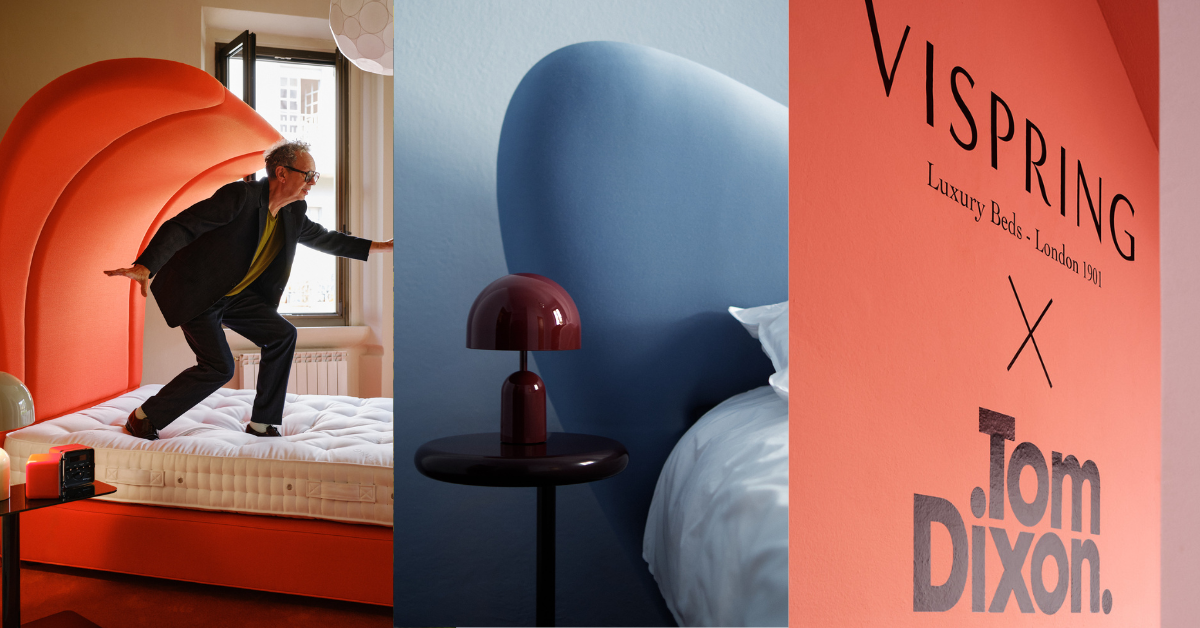
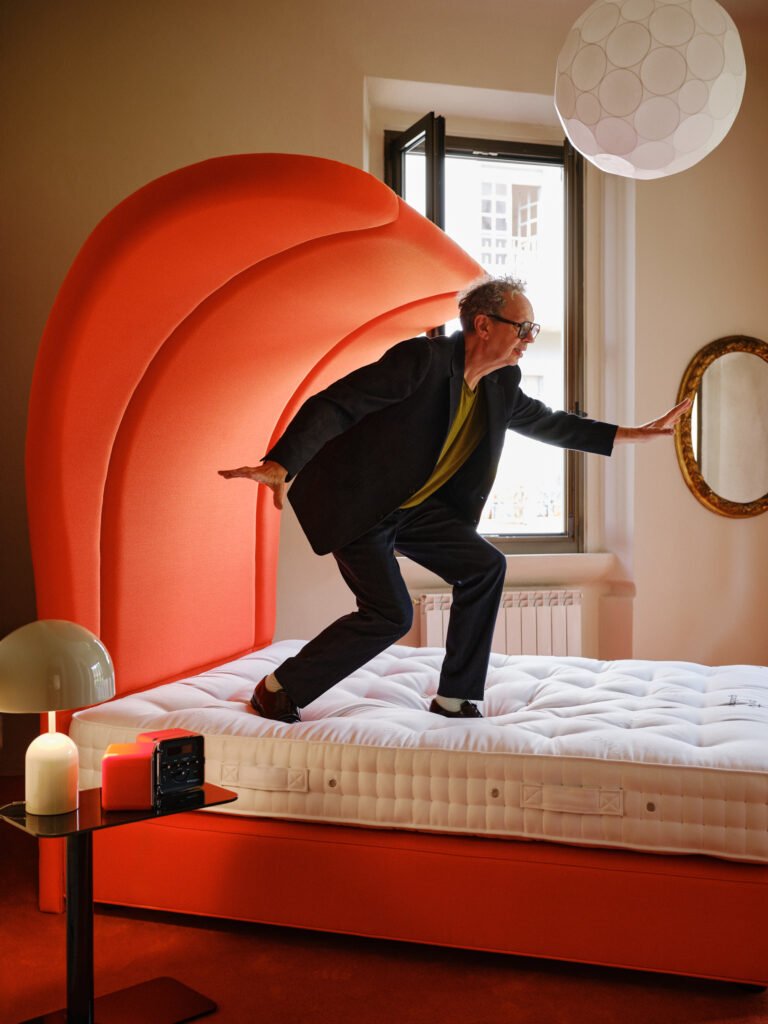
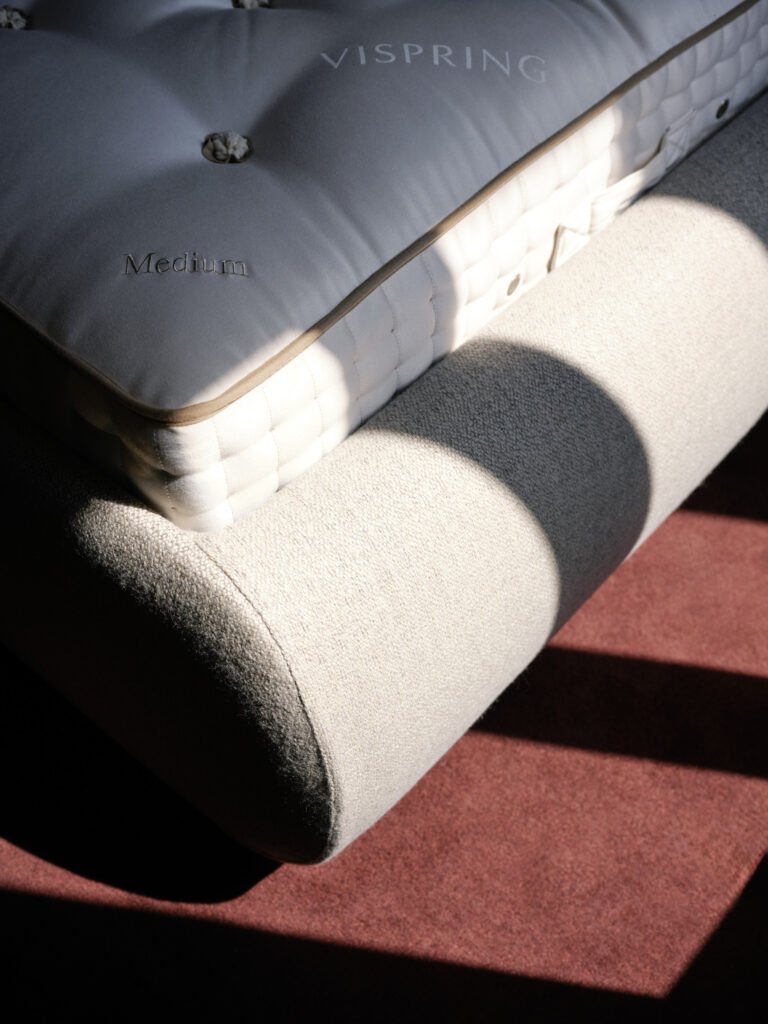
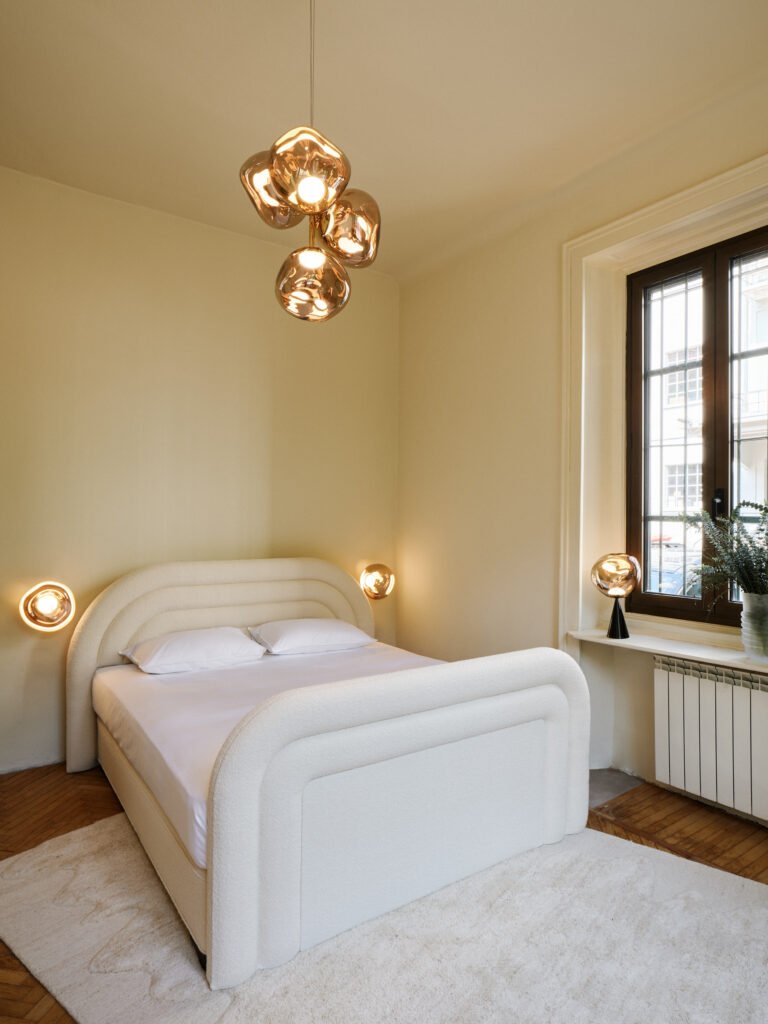
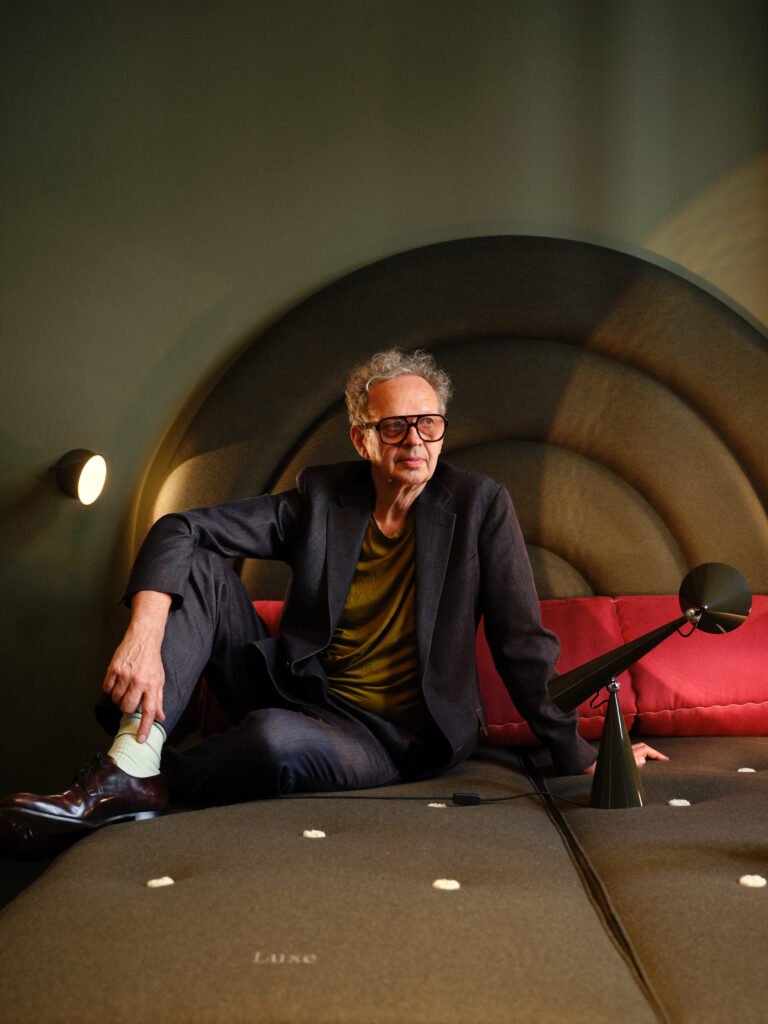
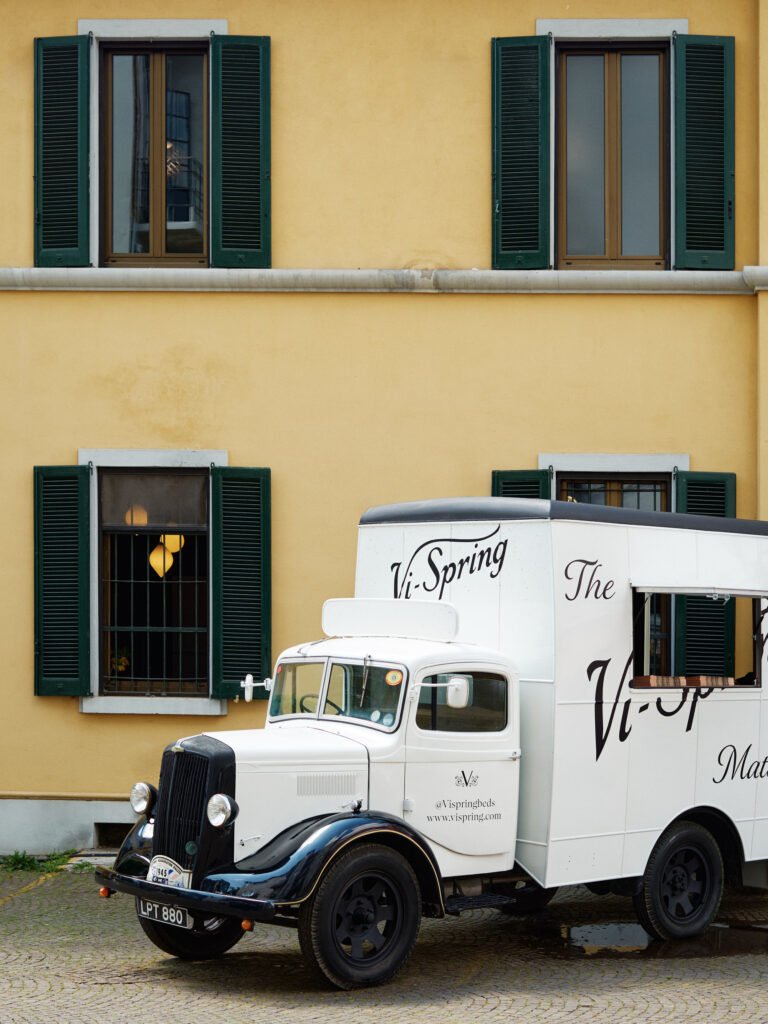
The Vispring collaboration carried real weight in the rooms themselves. To mark its 125th year, the Plymouth bed maker built four new headboards and a bed frame for its permanent line, plus three pieces made only for Milan — among them a flared, sculptural headboard in red, and a groove-ribbed frame in boucle. One room reworked The Princess and the Pea as a stack of a dozen mattress toppers, each showing a different archive fabric. “The bed is the piece of furniture we spend the most time in contact with throughout our lives,” Dixon said of the partnership. “It is a primary refuge that deserves more celebration.”
The hotel was built with other partners too (VitrA for the bathrooms), but Dixon is clear about the difference between a partnership that makes sense and one that merely looks good on paper. “There are too many marketing partnerships. Sports people with watches, race drivers with lines of clothing. Everybody’s collaborating.” What he looks for is logic: a genuine extension of his world of shape and materiality into entirely different channels. Toilets, he offers, are the paradigmatic example: sold to plumbers, shown at different trade fairs, bought at a different point in every project cycle. Apparently tangential. Entirely coherent. “There’s always a logic to a good collaboration, which you don’t need to explain anymore.”
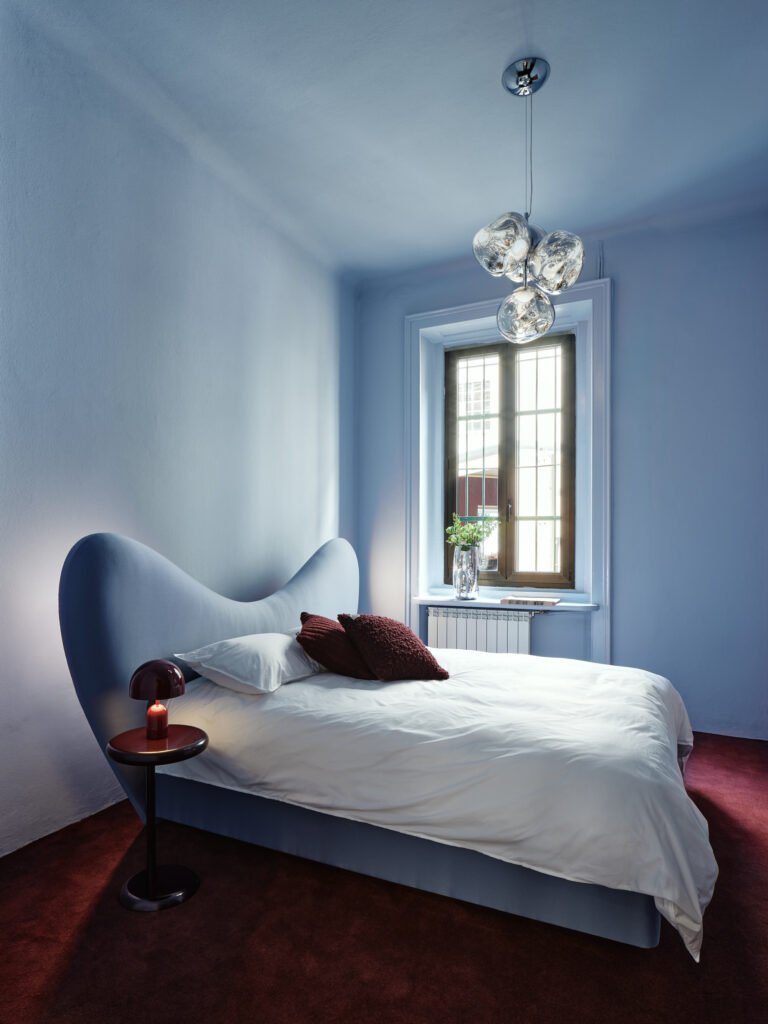
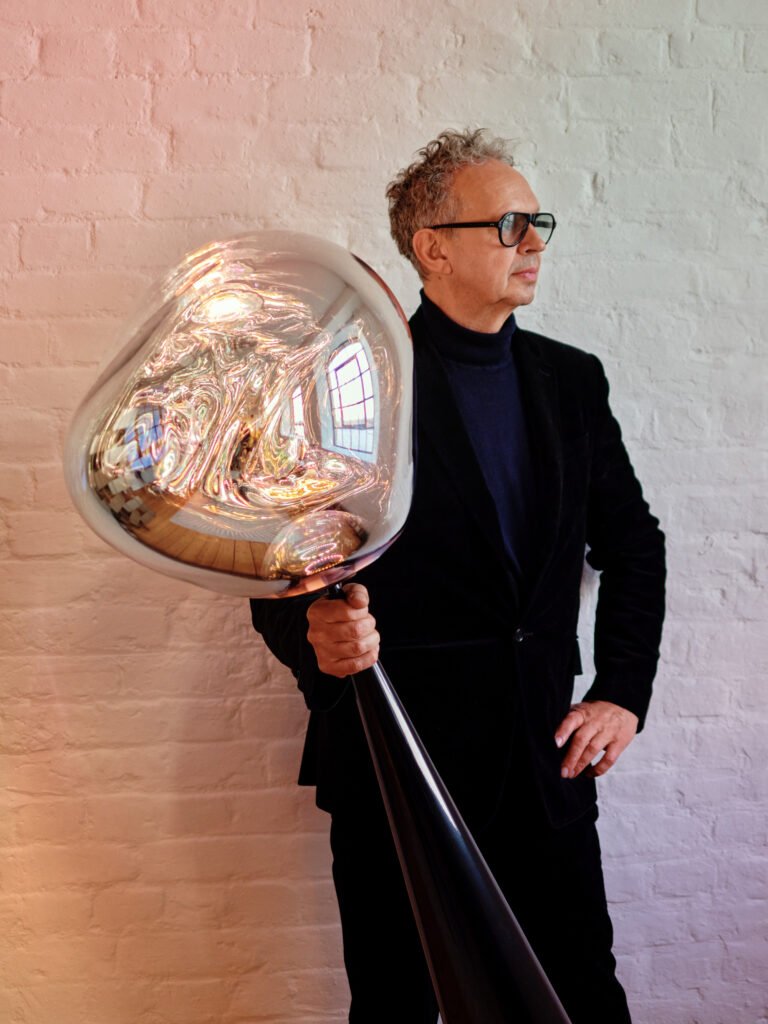
His pendant lamps have been copied so widely that design ownership becomes almost philosophical. “It’s really hard to claim that a sphere with light coming out of it belongs to you. It’s very hard to patent or copyright a shape.” His response has not been litigation but momentum: new work, new stories, forward motion. “You know, it’s kind of interesting to watch,” he says. “Sometimes we’ve tried to copy the copyists.” He studies how they achieve their prices, what can be learned rather than litigated.
On trends, he is consistent: interiors are not fashion. “You can’t really follow trends, because the things are there for ten years. You don’t want them to become un-trendy in three.” His prescription, try not to try too hard, concentrate on materiality, applies equally to a pendant lamp and a twelve-room hotel in a century-old mill. On sustainability, he is more pointed still. He started his career collecting scrap metal off London streets. “Proper, proper sustainability,” he says. What he argues for now is more radical than anything the recycled-material conversation allows. At the Mua Mua Hotel, a London gallery has installed in a corner, selling some of his earliest pieces as antiques at considerably higher prices than he once charged. “If things are still working in an interior 400 years later, that’s sustainable,” he says. “It’s not about making it from recycled. It’s about not allowing it to be recycled.”
The same pragmatism extends to AI. He uses it to accelerate the process, “usually just to reject ideas, but it allows you to process things faster.” He is less alarmed than many of his peers. What strikes him as genuinely interesting: because AI design tools run on text prompts, fluency with language is quietly becoming a design skill in its own right. “By being good at writing, you’ll be a better designer on AI, because it’s word prompts. Which is a bit frightening.”
After Milan, he took the project to Denmark: showing the hotel at a Copenhagen fair, recontextualised in a car park, making the case to a different kind of client. Not a hotel assembled from partners, but a single designed experience from the ground up. “It’d be nice to do a bigger one,” he says. “I need a swimming pool. And a business centre.”
Asked whether he has ever made something he is entirely satisfied with, he doesn’t hesitate. “I spend my whole time being dissatisfied. Once you’ve made something, you think: if only I’d just changed this, made this better. That’s what keeps me going. I’m never happy.”
The grain mill is still standing. It just holds different things now.
Tom Dixon’s work is available at tomdixon.net. The Mua Mua Hotel at Milan’s Mulino Estate is now open.
Vispring X Tom Dixon collaboration is available at www.vispring.com.
Images: Tom Dixon